
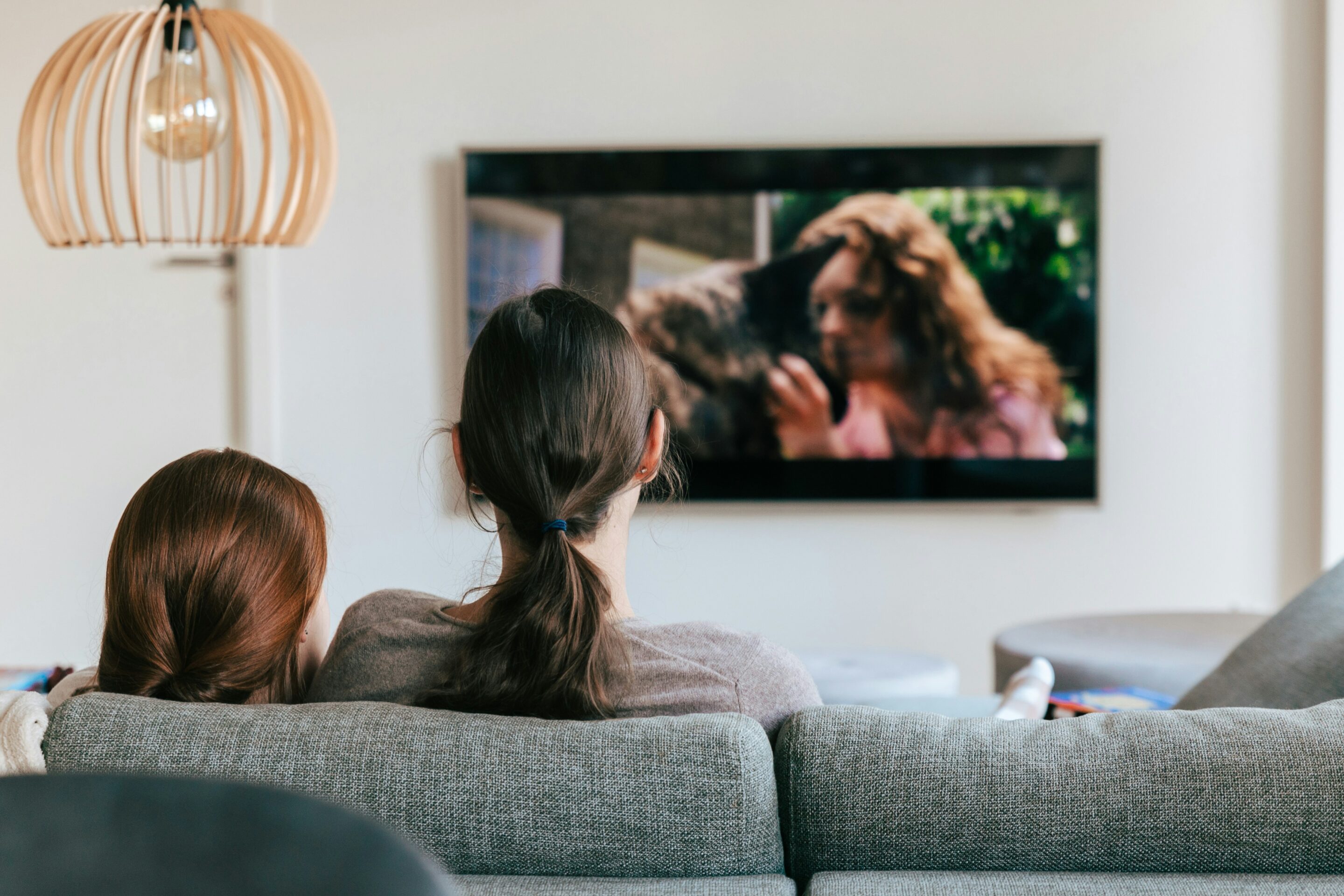
There is a unique sense of relaxation and escape we find on a couch, usually after a long day: the television is on and we’re watching someone else’s life fall apart in real time.
Maybe it’s a couple fighting in the kitchen on Summer House. It could be a friendship imploding over a rumor on The Real Housewives. Or perhaps it’s the long-awaited reunion episode where two people who haven’t spoken in months are suddenly sitting six feet apart under studio lights, being asked to explain with laser-like precision exactly what went wrong.
We watch. We gasp. We pick sides. Then we dive into the group text to debrief the episode with friends. And often we think to ourselves… “I would never act like that,” and then go back to our typical day-to-day.
Many would call this routine a guilty pleasure, emphasizing how trashy it is. Some might even judge you for wasting your time watching dramatic people argue, fight, hook up, and break up.
But as a therapist and reality television enthusiast myself, I’m not here to judge you. Nor am I here to tell you that you shouldn’t enjoy mindless reality TV and that you should instead pick up a book to unwind. I understand why people love it and why we come back to it. I would even argue there is much to explore, value, and learn from these casts of complex, flawed characters.
I’m much more interested in the question of “What can we actually learn from our favorite reality television season arcs?” If you’re ready to watch the table flip along with me, grab your popcorn, and let’s discuss.
Why we love to watch reality TV
It’s not an unsolved mystery. We watch reality TV because we’re curious about other people. We tune in because it’s entertaining and because it’s predictable enough to be comforting but unpredictable enough to keep us hooked. Reality TV gives us something to talk about with our friends. And we watch because watching someone else’s complicated relationship can temporarily distract us from, or make us feel better about, our own.
Unlike a two-hour movie, reality television can give us dozens, sometimes hundreds, of episodes over years of a relationship. We see the first date, the engagement, the wedding, the argument, the apology, the relapse into the same argument, and the friend who has been saying the same thing for three seasons.
We become familiar with these casts. And familiarity creates a feeling of intimacy, even though we are only seeing a curated version of someone’s life.
We know, and appreciate, that reality TV is not real life
We are not watching the whole relationship, of course. We’re only watching what the production allows us to see. Cameras are present, producers are involved, and conversations are surgically selected. Hours of footage become minutes of television. Conflict is naturally more likely to make the final cut than a quiet Tuesday night when two partners communicate beautifully about their feelings. And the people on these shows know they are being watched.
Reality show producers love for us to pick sides and have intense, visceral reactions to our favorite Bravo stars. We love a controversial or hot, black-and-white take. But for those who want to deepen their interpretation of a conflict, I think it’s far more interesting to explore the complexity of a situation and how it got to such an intense place than to pick the most obvious side.
And if we can sit with the complexity, I believe it can offer valuable takeaways for our lives too. Not to mention, I think it makes the overall viewing experience much more engaging too.
Reality television still isn’t real life — but that doesn’t mean that we don’t get a glimpse into some very real moments and emotions where the truth comes out. I believe if we’re looking for them, our favorite reality shows can reflect some important real-life patterns and questions back to us.
Reality TV can be an interesting mirror
Watch any episode of any season of nearly any reality show and you’ll see familiar patterns of interpersonal drama.
We pursue, withdraw, defend, criticize, and avoid. We make assumptions, and we keep score.
We bring up old grievances when we’re supposed to be discussing something new. We want to feel heard, but sometimes we confuse being heard with being agreed with. And we frequently argue about the surface issue when the real issue is something much deeper and likely more vulnerable.
Reality television gives us an exaggerated, edited, sometimes chaotic version of these patterns. That can make them easier to recognize and question. As we watch these patterns unfold, try to look beyond what is being said or argued and think about these questions to find the real relationship lessons under the surface:
- What are we actually fighting about beneath the surface issue?
- What might each person be afraid of losing?
- What needs or vulnerabilities are being expressed through the conflict?
- What might I be missing because I am only seeing one version of the story?
- What can I learn from this dynamic that might help me understand my own relationships?
And perhaps most importantly: Can I stay curious about someone’s behavior without immediately deciding that I know why they are behaving that way?
That question brings us to some of the reality TV relationship arcs that I’ve found most interesting this year.
What can we learn about marriage from Kyle and Amanda on Summer House?
The relationship between Kyle Cooke and Amanda Batula on Summer House is a particularly interesting example because viewers watched their relationship evolve over years—from booty call to committed relationship, to navigating cheating rumors, engagement, wedding planning, and marriage, with ever-increasing conflict.
The couple ultimately announced their separation in January 2026 after nearly a decade of relationship history documented on Bravo.
It’s not about who was “right”
Because viewers had been watching for so long, it was almost inevitable that viewers and fans would want to identify “the problem.” With Kyle’s problematic drinking and his many cheating rumors that surrounded their relationship, alongside Amanda’s controversial, ill-timed rebound relationship with their mutual friend and Summer House cast member West Wilson, viewers have gone back and forth about who (or what) “the problem” really was. But if we stop there, we actually miss so many more important takeaways from their relationship arc.
Relationship problems are rarely as simple as hero and villain, even when one person’s behavior is clearly hurtful or unhealthy. In fact, one of the most interesting things about Kyle and Amanda’s relationship is that you can understand how both people could feel deeply hurt, misunderstood, or disappointed without either person’s experience automatically invalidating the other’s.
Their relationship seems less useful as a case study in “who was right?” and much more useful in what happens when two people have different ideas about what their shared life is supposed to look like.
Love is not the same thing as alignment
Over the years, viewers saw disagreements around lifestyle, work, partying, finances, where to live, having children, and what partnership should look like. They were also building a business together, with Amanda working alongside Kyle at Loverboy, which meant that the relationship wasn’t neatly divided into “our marriage” and “our jobs.” Their personal and professional lives were deeply intertwined, but also incredibly misaligned.
Two people can genuinely love one another and still struggle to build a life together. In couples therapy, we often focus heavily on communication: “We just need to communicate better.” Sometimes that’s true. But often the more difficult question is: “What are we actually trying to build together?”
That question can be much more uncomfortable than “How can we communicate better?” because it asks us to look beyond the individual argument and examine the shared life underneath it.
If one partner imagines a future in New York City and the other imagines being closer to family, that isn’t necessarily a communication problem. If one person wants children now and the other isn’t ready, same thing. If one partner experiences nightlife as freedom and connection while the other experiences it as instability, the couple isn’t simply disagreeing about going out — they’re attaching different meanings to the same behavior.
That’s where couples can get stuck. One person says, “Why can’t you just come home?” The other hears, “You don’t get me. You’re controlling me.” One says, “Why don’t you prioritize me?” The other hears, “Nothing I do is ever enough.” Suddenly the argument isn’t about what time they came home. It’s about: Do I matter to you? Can I trust you? Are we even on the same team?
What the argument was actually about
This is why it’s tempting, but ultimately limiting, to reduce a relationship like Kyle and Amanda’s to a list of offenses. Reality television encourages us to collect evidence — the night someone stayed out too late, the comment that felt dismissive, the rumor, the argument, the apology, the next argument. We build a case for one person or the other. But relationships don’t usually fall apart because of one isolated incident. Individual incidents become symbols of something larger that’s been looming for a long time.
Kyle’s drinking isn’t just about drinking if Amanda experiences it as evidence their priorities are fundamentally different. Amanda’s frustration is about more than feeling annoyed if Kyle experiences it as evidence he isn’t accepted for who he is. The behavior matters — but so does the meaning each person assigns to it. We don’t have to agree with every choice Kyle or Amanda made to recognize the larger pattern. Sometimes the most important thing to notice is what the argument keeps revealing.
Don’t wait for the resentment to hit
Kyle and Amanda’s story offers one more lesson: relationship problems rarely begin when the audience first notices them. By the time a couple is having the same fight on camera, there may already be years of unresolved hurt underneath it — worth remembering in our own relationships too.
Pay attention when the same disagreement keeps coming back, and listen for the longing beneath the complaint.
- “Why don’t you ever come home?” might contain, “I miss you. I want to feel important to you again.”
- “Why don’t you know your limit with alcohol?” may actually include, “I need to feel more secure with you to let you in again.”
- “Why do you always focus on the negative? Why don’t you appreciate everything I do and how much stress I’m carrying?” could really be, “I want to feel seen, known, and valued by you.”
And even “Summer is supposed to be fun. Amanda… not fun.” might really signal, “I miss when you let loose with me, and we can unwind together.”
If we want to understand our relationships rather than simply win our arguments, we have to get curious about what’s happening underneath the surface. That, to me, is the more interesting lesson.
For a closer look at how a surface argument and the real argument underneath it usually differ, our therapist team has written about that dynamic in The Communication Iceberg. And if “love isn’t alignment” resonates, these questions are a good next place to sit with it.
What can we learn about navigating betrayal from The Real Housewives of Rhode Island?
One of the more interesting relationship stories on The Real Housewives of Rhode Island this season is Rulla Nehme Pontarelli’s experience with her husband’s infidelity and how she navigated her friends’ involvement.
“How can she not see it” misses the point
What makes the storyline compelling isn’t whether Brian was unfaithful — Rulla has acknowledged that he was. It’s what happened afterward, when the other women in the group kept bringing her information they believed suggested the relationship was ongoing. Rulla challenged the interpretation of that evidence and maintained the affair was in the past and that she and Brian were rebuilding.
As viewers, it’s too easy to think, “How can she not see what’s happening?”
But we have the benefit of editing, multiple perspectives, and information presented in a way designed to make a storyline legible — and none of the emotional stakes of being the person at the center of the betrayal. That distance can create an illusion of clarity. We see what we believe to be obvious because we aren’t the ones who have to decide what that information means for our marriage, our family, our identity, our future, or our understanding of the person we thought we knew.
Therapists have a name for what’s often happening underneath this: betrayal blindness. But the more useful way to understand it isn’t the textbook definition — it’s what it actually looks like in the room. It rarely looks like someone failing to notice the sometimes obvious evidence. Most of the time, the person has seen it. What I see more often is someone who has done the math on what accepting it would cost — the marriage, the family structure, the shared history, the story they’ve told themselves about who they are. They aren’t emotionally ready to pay that price yet. That’s a very different reality than not knowing altogether.
Most often, I’ve worked with women who are calculating the cost of losing precious time with their children if they separate from their partner and share custody. They struggle with the experience that even though their husband has betrayed them and caused them deep pain, they may be a wonderful father to their kids. These women often weigh their children’s specific ages and contemplate how a divorce may affect their development. Turning a blind eye may feel like the most protective strategy to them while they’re in the haze of a trauma like discovering infidelity
What the betrayed partner actually needs from the people around her
When the person who betrayed you is also your children’s parent, your financial partner, your closest companion, or the person you’ve built an entire adult life with, accepting the betrayal can feel like accepting the collapse of much more than a relationship.
That doesn’t mean we should diagnose Rulla — or anyone else — with betrayal blindness, and it doesn’t mean staying with an unfaithful partner is always evidence of it. People stay for many reasons: love, family, finances, hope, a desire to preserve something meaningful, or simply because they aren’t ready to make a permanent decision.
What I find more useful therapeutically is the question: what does this person need in order to make sense of what happened and decide what she wants to do next?
Betrayal creates a particular kind of psychological whiplash — the person you trusted becomes the person you have to evaluate. You can love your partner and be furious with them. You can want to believe the relationship can be repaired while still having doubts. Healing is rarely linear, and there’s no universal timeline for when someone should know what they want.
When a friend tells us something that seems painfully obvious from the outside, our instinct may be to say “you need to leave,” or to start collecting evidence to convince them we’re right. But supporting someone is different from forcing them toward the conclusion we’ve already reached. We can ask what they know for sure, what they’re still trying to understand, what they want right now, what would make them feel safer.
You can ask:
- “What do you know for sure?”
- “What are you still trying to understand?”
- “What do you want right now?”
- “What would make you feel safer?”
- “What would rebuilding trust require?”
This allows you to express concern while leaving room for their process.
If there’s genuine danger or abuse, that may call for more direct support and safety planning — but in most difficult relationship situations, our role as a friend isn’t to become the judge, jury, and executioner of someone else’s marriage. Sometimes the most supportive thing we can say is simply, “I don’t know exactly what you should do, but I’m here to help you think through it.”
So, can we really learn things from reality TV?
I’ll leave that answer up to you. But from my couch, learning more about the complexity of relationships and the human experience — even within the homes of the rich and famous — is ultimately why I find reality television so fascinating. We start by watching other people’s relationships, but if we’re willing to look more closely, we start seeing ourselves.
We see the partner who pursues when they’re afraid, the person who withdraws when they’re overwhelmed, the friend who becomes the messenger because they can’t tolerate watching someone get hurt. We may watch someone who needs more time before they can accept something painful, and the couple who keeps having the same argument because neither one feels understood.
And because we’re watching from the outside, we have the luxury of believing we’d handle everything differently. Maybe we would. But maybe the more useful question isn’t “What would I do?” It’s “Can I understand why this person is doing what they’re doing?”
We can hold more than one truth at a time
That shift — from judgment to curiosity — is one of the most valuable skills we can bring into our own relationships. Reality television gives us safe distance to examine complicated human behavior. We can pause the episode, debate the evidence, decide who we think is right. But we can also practice something harder: holding more than one truth at a time. Someone can behave badly and still be hurting. Recognizing evidence doesn’t mean you’re ready to act on it, and staying doesn’t mean you’re not deeply hurt.
If we can learn to sit with that complexity while watching the people on our screens, perhaps we can get a little better at sitting with it in our own lives too.
So the next time you find yourself yelling at the television, texting your friends “how can she act this way?!” — pause. Consider what you might be missing, what could be happening underneath the behavior, what you’d want from a friend if you were the one in the middle of it. Then, by all means, keep watching. Grab the popcorn. Pick your favorite. Debate the reunion.
Just remember that beneath the editing, the confessionals, and the perfectly timed commercial breaks are people navigating relationships with the same complicated emotions, fears, hopes, blind spots, and needs the rest of us have.
Reality TV and betrayal — common questions
Does watching other people’s relationships on reality TV change how you see your own?
It can — mostly by giving you language and pattern recognition you didn’t have before. Multi-episode arcs, plus hindsight and editing, can make it easier to spot surface-versus-deeper-issue dynamics in your own relationship.
Why do people stay with a partner after infidelity, even when it looks obvious to everyone else that something is still wrong?
The betrayed partner may stay not because they haven’t seen the evidence of infidelity, but more often because accepting it may cost them something enormous: the marriage, the family structure, the shared history, or the story they’ve told themselves about who they are. That’s betrayal blindness, a self-protective response to overwhelming loss. Our Beyond Betrayal was built exactly for this type of complex challenge.
How do you support a friend going through infidelity without pushing them toward a decision you think is obvious?
Ask questions that leave room for their process instead of building a case: what do they know for sure, what are they still trying to understand, what do they want or need right now. Supporting someone is different from convincing them. If there’s real danger or abuse involved, that calls for more direct support and safety planning.